

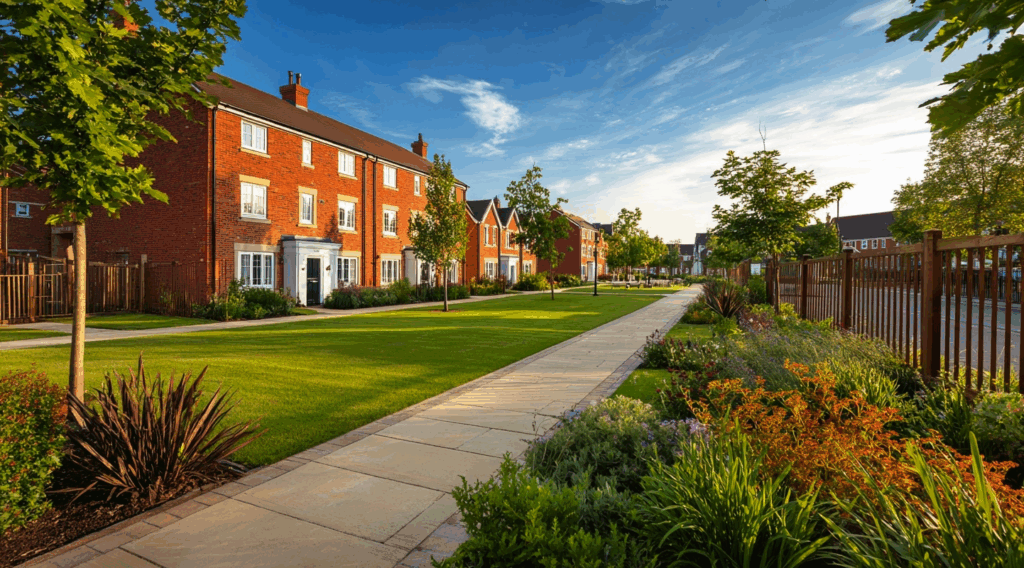
New-build homes across York have exploded in popularity over the last decade. From Clifton Moor and Haxby to developments in Huntington, Osbaldwick and Stockton on the Forest, thousands of homeowners now live in modern estates with fresh layouts, landscaped gardens and new boundaries. But there is one recurring issue almost every new-build owner faces — fencing.
Developers usually put up the most basic boundary they can: thin lap panels, timber posts sunk too shallow, and no gravel boards to protect the bottom edge. These fences look fine for a year or two, but most people quickly realise they need something stronger, taller or more private.
As someone who installs fencing across York every week, I know the exact problems new-build owners face and how to solve them properly. This guide explains what you should know before replacing your new-build fence, which materials work best, and how to avoid expensive mistakes.
Why new-build fencing rarely lasts in York
You might expect a brand new home to come with a long-lasting garden fence — but that is rarely the case. Developers have one aim: put something up that meets minimum requirements at the lowest cost possible.
This leads to several problems:
- Lightweight lap panels that cannot handle York’s wind.
- Shallow timber posts that lean or rot within a couple of years.
- No gravel boards, leaving the timber in direct contact with damp soil.
- Inconsistent boundary lines where different contractors installed different sections.
- Gaps underneath where pets escape or soil erodes.
After the first winter, cracks, leaning, wobbling posts and blown-out panels are extremely common. That is why so many new-build owners upgrade their fencing within the first two to four years.
What you need to know about new-build boundaries
Before replacing your fence, it is important to understand how boundaries work on new-build estates.
Toe-the-line boundaries
Most new-build gardens in York use ‘toe-the-line’ boundaries. This means the fence sits directly on the property line rather than being offset into one side or the other. You cannot move these lines without neighbour agreement.
Shared ownership responsibilities
On many estates, one or more sides of the boundary are shared responsibilities between neighbours. In most cases, you can replace your own fence on your side, parallel to the existing boundary, even if the neighbour does not want a replacement.
Height restrictions
Most new-build gardens have a standard fence height of 1.8 metres. You can go slightly higher in some situations, but anything over 2 metres may require permission. Trellis extensions are a popular solution when extra privacy is needed without exceeding height rules.
The best fencing styles for new-build homes in York
The fencing you choose should match the design of a modern home while also solving the weaknesses of the original developer fence. Here are the most effective options.
1. Closeboard fencing — the strongest upgrade
For most new-build properties, closeboard fencing is the most practical and long-lasting choice. It replaces flimsy panels with a robust structure built to withstand York’s weather.
Benefits include:
- Solid privacy with no gaps.
- Concrete posts and gravel boards that protect against rot.
- Superior wind resistance in exposed estates.
- Flexible height options for extra screening.
Closeboard looks tidy, fits both modern and traditional estates, and lasts for decades when installed properly.
2. Composite fencing — ideal for modern garden makeovers
Composite fencing has become extremely popular around York’s new-build estates because it matches the clean, contemporary design of newer homes.
Its key advantages:
- Low maintenance — no painting or staining.
- Modern appearance with consistent colour.
- Strong moisture resistance ideal for damp gardens.
- Long lifespan with minimal upkeep.
Composite costs more upfront but pays off long-term, especially for busy households wanting fuss-free fencing.
3. Slatted fencing — perfect for stylish patio areas
Slatted fencing adds a designer look to new-build gardens and allows more light through, which is useful in smaller plots.
Great for:
- Sectioning off patio or entertainment areas.
- Creating stylish garden zoning.
- Reducing the “wall of fencing” effect in narrow gardens.
It is not as private as closeboard, so many homeowners mix slatted fencing near patios and closeboard further down the boundary.
4. Decorative trellis sections — extra height without blocking light
If you need more privacy but want to avoid darkening the garden, trellis-topped fencing is ideal. It offers privacy where you need it but keeps the top portion open and airy.
Common fencing problems in new-build gardens (and how to fix them)
Here are the most frequent issues I see on York estates and the best way to address each one.
Problem 1: Posts leaning after their first winter
This is due to shallow post depth and soft clay soil. The solution is deeper posts set in stronger concrete, ideally concrete posts for long-term reliability.
Problem 2: Panels rattling or blowing out
Lightweight developer panels often collapse in strong winds. Replacing panels with closeboard or composite instantly improves stability and lifespan.
Problem 3: Gaps underneath the fence
Developer fences often follow uneven ground, leaving gaps where pets escape and soil spills onto neighbours’ gardens. Concrete gravel boards eliminate these problems.
Problem 4: Lack of privacy from overlooking windows
Many new-builds have upstairs windows that look directly into gardens. Taller fencing, trellis or strategic slatted sections can solve this without creating planning issues.
Problem 5: Fence lines that look mismatched
Because several contractors work on the same estate, neighbouring fence lines often mismatch in colour, height or style. Upgrading to a consistent, modern style transforms the entire garden.
Should you repair or replace your new-build fence?
Sometimes a repair is possible — but in most cases, new-build fencing is too weak for long-term fixes. The timber posts are often already rotting, and panels usually cannot be strengthened enough to justify the labour.
A full replacement is usually the best option if:
- The fence has blown down more than once.
- Multiple panels or posts are damaged.
- You want better privacy or a more modern look.
- The fence is less than five years old but already failing.
Popular new-build fencing upgrades in York
Here are some of the most requested upgrades I install across York’s new estates.
1. Closeboard with concrete posts and gravel boards
This is the number one upgrade for homeowners who want long-term performance. It provides exceptional strength and privacy and is built to handle York’s windy, damp conditions.
2. Composite fencing for modern outdoor spaces
Ideal for properties with contemporary landscaping. Composite is clean, low maintenance and visually consistent — perfect for show-home-style gardens.
3. Slatted feature fencing near patios
Often paired with porcelain patios or raised beds to create stylish, modern seating areas.
4. Taller fences for improved screening
Extra height — even an additional 20–30cm — can make a big difference in overlooked gardens. Trellis can help achieve this without planning issues.
Cost expectations for new-build fencing upgrades
The cost depends on the materials you choose and the layout of your garden, but here is the general hierarchy:
- Basic panel replacement – the cheapest but least durable.
- Closeboard fencing – strong, long-lasting and great value.
- Composite fencing – premium price but minimal upkeep.
- Mixed-material designs – cost varies based on layout and style.
If you want a precise quote, the best approach is a site visit. I will measure, assess ground conditions and show you samples to help you choose the right specification.
How York Fencing designs fencing for new-build homes
At York Fencing, we always start by looking at:
- How exposed your garden is to wind.
- The condition of existing boundary lines.
- How much privacy you want.
- Your preferred style (modern or traditional).
- Your long-term maintenance preferences.
From there, we design a fence that solves the issues you inherited from the developer and gives your garden a stronger, smarter and longer-lasting boundary.
Ready to upgrade your new-build fencing?
If you live in a new-build home in York and want a fence that actually lasts, we can help. Whether you want strong closeboard boundaries, stylish slatted designs or ultra-low-maintenance composite fencing, we will create a tailored solution for your garden.
Send us your postcode and a rough boundary length to book a no-obligation site visit and fixed-price quote.
You can explore your options on our Garden Fencing page or head to the contact page to get started.