

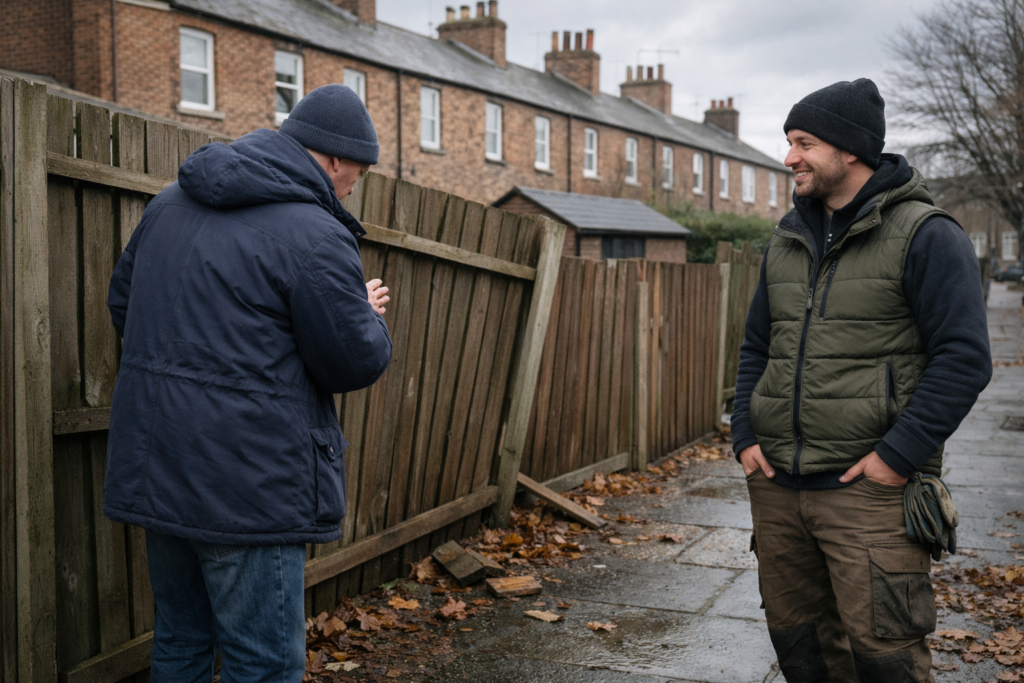
High winds can turn a perfectly good boundary into a mess overnight. One minute your fence is doing its job, the next you have panels on the lawn, posts wobbling, and a gap that makes the garden feel exposed. If you are dealing with wind damage right now, this guide will help you take the right steps in the right order. If you need a hand quickly, our fence repairs in York service can assess the damage, make the area safe, and recommend a repair that lasts.
It is tempting to rush into a quick fix, but the best results usually come from a calm, practical approach. Wind damage often reveals underlying weaknesses such as rotten posts, shallow concrete, tired fixings, or panels that have taken years of weathering. Deal with the urgent safety issues first, then decide whether repair or replacement is the most sensible move.
Start with safety and access
Before you move anything, take a moment to check whether the damage has created a risk to people, pets, or property. A half-fallen panel can have sharp fixings, splintered timber, or nails exposed. Posts can be under tension, especially if a panel is still partly attached. If the fence is alongside a footpath or shared access route, treat it as a priority.
- Keep children and pets away from the damaged area until you know it is stable.
- Do not lean panels upright against walls or sheds if the wind is still strong – they can go again.
- Check gates if they are attached to the damaged run – hinges and latches can become strained.
- If a panel has fallen onto a public path, move it only if it is safe to do so, then place it flat and out of the way.
If the wind is still blowing hard, you may be better waiting until conditions calm before attempting anything hands-on. The priority is preventing injuries and reducing further damage, not wrestling with a fence in gusty weather.
Check what has actually failed
Wind damage rarely happens at random. Most fences fail at their weakest point, and understanding what failed will tell you whether you are looking at a straightforward repair or a bigger underlying issue. A fence can look “mostly fine” while the posts are quietly giving up below ground.
Look for the most common failure points:
- Fence panels: cracked frames, snapped rails, broken slats, or panels blown out of the grooves.
- Posts: movement at the base, leaning, twisting, visible rot, or cracks around fixings.
- Concrete and footing: loose post sockets, crumbling concrete, or shallow footings that have lifted.
- Fixings: nails pulled through timber, screws stripped, brackets bent, or rails torn away.
- Ground level changes: soft ground and waterlogging can reduce stability and make posts more likely to shift.
A useful tip is to gently push the post (not the panel) with one hand. If the post moves at the base, the problem is usually in the footing, not the panel. If the post feels solid but the panel is damaged, you may be able to replace just the panel or rails.
Take photos before you tidy up
Even if you are not making an insurance claim, photos are handy for quotes and decision-making. Take wide shots of the fence line and close-ups of the damage and fixings. If panels have come down, photograph where they were attached and any visible rot on posts or rails.
If you are a landlord, photos are especially useful for keeping records and explaining repair choices to tenants or managing agents. If you have shared boundaries, photos can also help keep discussions factual and calm.
Temporary steps you can take without making it worse
There are a few simple things you can do to reduce further damage, as long as you do not force anything that is unstable. The goal is not a perfect temporary fence. The goal is to prevent the situation getting worse and to keep the area safe until it can be repaired properly.
- Lay fallen panels flat in the garden to stop them catching the wind again.
- Remove loose debris such as broken slats and exposed fixings from walking routes.
- If a panel is hanging but still attached, avoid pulling it – it can tear more fixings out of the post.
- Secure a gate if it will not latch, using a temporary tie or bolt, so it does not swing in the wind.
Avoid “quick fixes” that often create bigger repairs later, such as screwing through split timber, using undersized brackets, or trying to pack a loose post base with random offcuts. A proper repair needs stable posts and correct alignment, otherwise the next windy night will undo the work.
Repair or replace which is the sensible choice
This is the point where most people want a straight answer, and the truth is it depends on what has failed. Wind often exposes rot, poor installation, or an older fence that was already near the end of its life. The best decision is the one that gives you a secure boundary for the long term, without paying twice.
Repair is often the right call when:
- One or two panels are damaged but the posts are solid and upright.
- Fixings have failed but the timber is sound and the run is still aligned.
- Damage is limited to a gate latch, hinge, or a small section of rails.
- The fence is relatively new and the failure is isolated.
Replacement starts to make more sense when:
- Posts are rotten, leaning, or moving at the base.
- Multiple panels have failed along the same run.
- The timber is soft, split, or heavily weathered across the fence line.
- The fence has been patched repeatedly and still does not feel stable.
- You want to improve privacy or security at the same time as fixing damage.
If you are unsure, it is usually worth getting a professional assessment. A quick site visit can reveal whether you have a panel problem or a post-and-footing problem. Most expensive “repairs” happen when people replace panels repeatedly while the posts underneath are still failing.
Why fences fail in high winds
York gets its share of rough weather, and wind damage tends to follow familiar patterns. Understanding the cause helps you prevent the same problem repeating.
- Wind loading: Solid panels act like sails. If the fence has no give, the force transfers to posts and fixings.
- Shallow footings: Posts need sufficient depth and a stable concrete base to resist rocking.
- Rot at ground level: Timber often fails where it meets damp ground, even if it looks fine above.
- Older fixings: Rusted nails and tired brackets can pull out when the fence flexes in gusts.
- Waterlogged ground: Saturated soil reduces stability and makes posts easier to shift.
One of the most effective improvements for windy spots is ensuring posts are strong and well-set, with correctly fitted rails and secure fixings. In some gardens, choosing a fence style that allows a bit of airflow can reduce pressure during storms. It is not always about making everything “heavier” – it is about making it properly specified and installed.
How a proper fence repair should be done
A lasting repair is not just “put a new panel in”. The repair should restore the fence line so it is stable, aligned, and able to deal with normal movement and weather.
On most repairs, we focus on:
- Post stability first – because everything else depends on it.
- Correct alignment – a fence that is already leaning will keep leaning.
- Appropriate fixings – using the right brackets, bolts, and screws for the materials involved.
- Replacing only what needs replacing – keeping costs sensible while ensuring strength.
- A tidy finish – because repairs should not look like patches.
If your fence has taken a hit and you want it repaired properly, our fence repair specialists in York can talk you through the options and quote for a fix that stands up to the next spell of bad weather.
When to act quickly and when it can wait
Not every damaged fence is an emergency, but some situations should be dealt with quickly to prevent risk and further cost.
Prioritise quick action if:
- The fence borders a public path, alley, or shared access route.
- A panel is at risk of falling onto a neighbour’s property or a walkway.
- You have a dog or young children and the boundary is now open.
- The fence supports a gate that no longer closes or locks correctly.
- The damage exposes valuables or creates a security concern.
It may be safe to schedule repair if:
- The damage is contained within your garden and there is no immediate hazard.
- The fence is still stable and upright but looks battered.
- You are planning a wider upgrade and want to repair as part of that project.
If you are unsure, a quick assessment is usually the best route. It is much easier to repair a small problem early than to rebuild a long run after it collapses.
Common DIY mistakes after wind damage
We completely understand the temptation to sort it out immediately, especially if you have a busy household or you are trying to keep the dog in the garden. The problem is that many quick fixes create extra work later.
- Replacing panels without checking posts – the new panel fails again because the post is loose.
- Using undersized brackets or fixings – they bend or pull out under load.
- Screwing into rotten timber – it feels solid for a week, then fails.
- Leaving a leaning post – it continues to shift and damages the next panel.
- Forcing a gate back into place – it strains hinges and can twist the frame.
If you want a repair that is cost-effective, it is usually better to fix the underlying cause, not just the visible damage.
Frequently asked questions
Can a fence be repaired after storm damage
In many cases, yes. If the posts are stable and the damage is limited to panels or fixings, a repair can restore the fence quickly. If posts have moved or rotted, replacement of posts or sections may be needed for a lasting result.
How do I know if my fence posts are rotten
Common signs include movement at the base, a lean that has worsened over time, soft timber near ground level, and cracks around fixings. Posts can look fine above ground while failing below, so a proper check is worthwhile.
Is it cheaper to repair or replace a fence
A repair is cheaper when the structure is fundamentally sound and the damage is isolated. Replacement can be better value when multiple sections are tired, posts are failing, or repeated patch repairs have not solved the problem.
How quickly should I fix a broken fence
If there is a safety risk, a public access concern, or you need to secure pets and property, it is best to act quickly. If it is stable and contained, you may be able to schedule the work, but leaving it too long can lead to bigger failures.
Get help with fence repairs in York
If your fence has been damaged by wind, do not guess your way through it. A straightforward assessment can save money and prevent repeat problems. We can repair storm-damaged panels, fix leaning sections, replace failed posts, and restore security and privacy with a tidy finish.
Ready to sort it? Visit our fence repairs in York page to learn more, or contact us to book a site visit and quotation.